Studio/Work/Downhill (Stage Adaptation)
Entertainment & Live Production2026Client Project

Downhill (Stage Adaptation)

Live theatrical production at the Alexis & Jim Pugh Theater (Dr. Phillips Center, Orlando) — LFDS led projection and multimedia design, transforming the stage through 48 custom projected environments.

Presented at the Alexis & Jim Pugh Theater within the Dr. Phillips Center for the Performing Arts, Orlando, Florida — May 29–31, 2026. Creative Director & Projection Designer: Kory Ricketts.

Client
Alexis & Jim Pugh Theater — Dr. Phillips Center for the Performing Arts (Orlando, FL) · May 29–31, 2026
Year
2026
Services
Creative DirectorProjection DesignerMultimedia DesignDigital SceneryVisual StorytellingCreative TechnologyQLab Programming
Tools
QLabPhotoshopAfter EffectsResolume
Downhill (Stage Adaptation) — hero
[01]

Project Overview

Downhill (Stage Adaptation) was a live theatrical production presented at the Alexis & Jim Pugh Theater within the Dr. Phillips Center for the Performing Arts in Orlando, Florida.

Laissez Fair Digital Studio led the production's projection and multimedia design efforts, creating visual environments that supported narrative transitions, atmosphere, storytelling, and audience immersion throughout the show.

As Creative Director and Projection Designer, Kory Ricketts oversaw the development of the production's visual media systems and projection environments while coordinating creative technology solutions that supported the overall production experience.

[02]

Project Contributions

LFDS delivered a full multimedia design package supporting the production's visual storytelling and live performance execution.

  • Designed 48 custom projection environments and scenic visual backgrounds.
  • Created multimedia assets and visual transitions to support scene progression.
  • Developed projection content that enhanced atmosphere, mood, and storytelling.
  • Supported sound cue development and multimedia coordination.
  • Coordinated with studio-supported lighting design efforts.
  • Created production documentation and visual planning assets to support execution.
[03]

Projection Design Process

The projection design process began with a close analysis of the script, character relationships, and thematic elements of the story. Each environment was developed not simply as a location, but as an extension of the people who occupied it and the role it played within the narrative.

Visual research, moodboards, architectural references, and cinematic lighting studies informed the design of every scene. The goal was to create environments that felt believable, emotionally resonant, and immediately recognizable to the audience while supporting the production's fast-paced transitions.

[04]

Environment Design

Forty-eight unique environments were created to support the production, each with its own visual identity, atmosphere, and storytelling purpose.

Locations included professional offices, government facilities, educational institutions, residential settings, places of worship, entertainment venues, and active development sites. Every environment was carefully designed to communicate character, status, mood, and setting through architectural style, lighting, color palette, and environmental detail.

[05]

Technical Integration

The projection system was integrated into the overall production workflow using QLab, enabling seamless coordination between scenic media, lighting, sound, and stage action. Custom cue sequences allowed environments to transition efficiently between scenes while maintaining the rhythm of the performance.

[06]

Project Impact

The production utilized immersive projected environments to transform the stage across multiple settings and story moments while reducing reliance on traditional physical scenery.

The project demonstrated LFDS's ability to apply creative technology, multimedia storytelling, and visual design principles within a live performance environment — reinforcing the studio's capabilities in projection design, digital scenery, and creative technology for theatrical productions.

Gallery

Selected frames.

12 images
Mirage — VIP power scene01 / 12
Dr. Bronson's Office — interior02 / 12
Bill Cleveland — Office03 / 12
Bill Cleveland — Home04 / 12
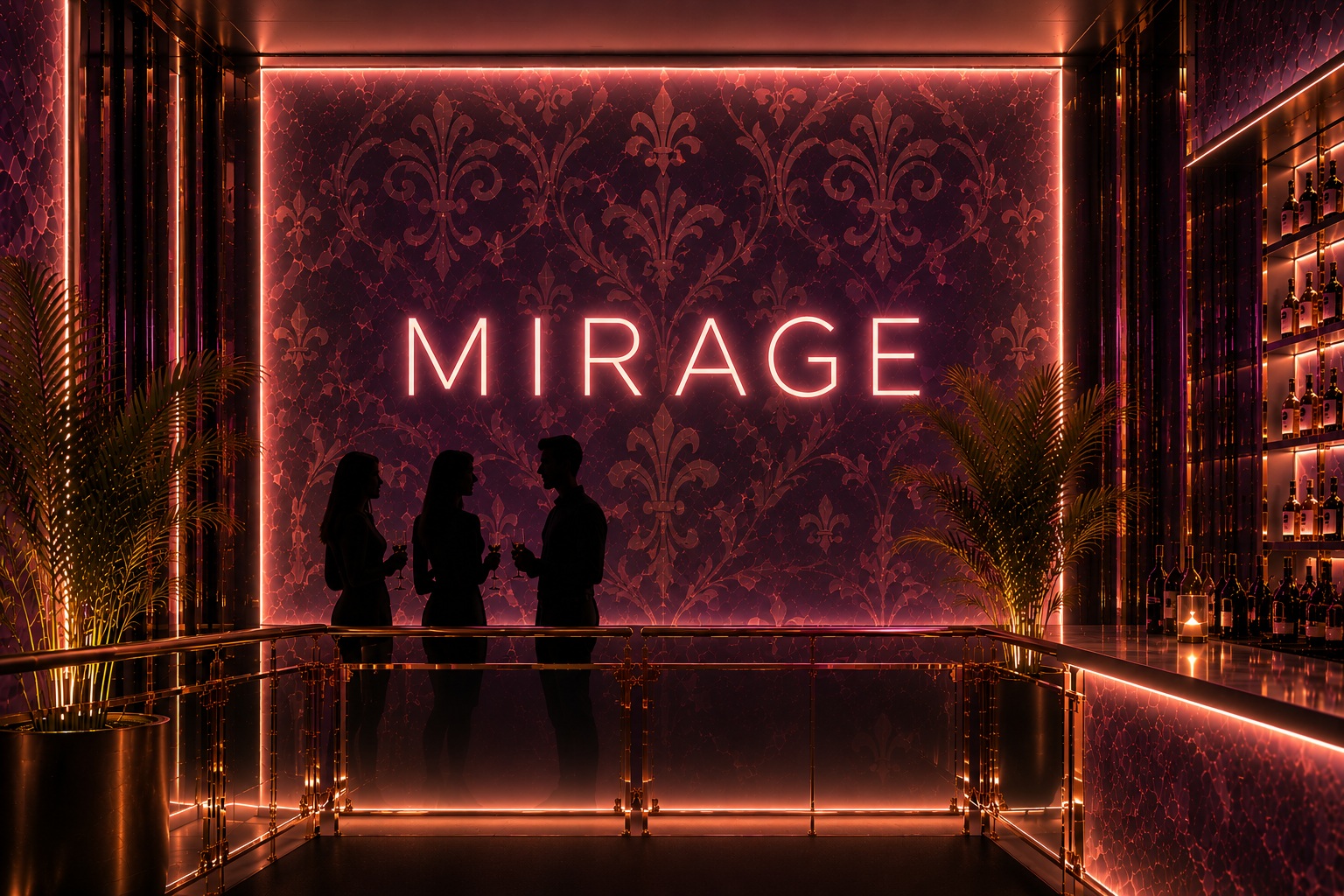
Mirage — dinner & bar scene05 / 12
Myer's Home — exterior06 / 12
Rob's Office — World of Sunshine07 / 12
FBI Field Office08 / 12
United American Bank — Lobby09 / 12
Bethune-Cookman — White Hall10 / 12
Shiloh MBC — Redemption11 / 12
Construction Site12 / 12